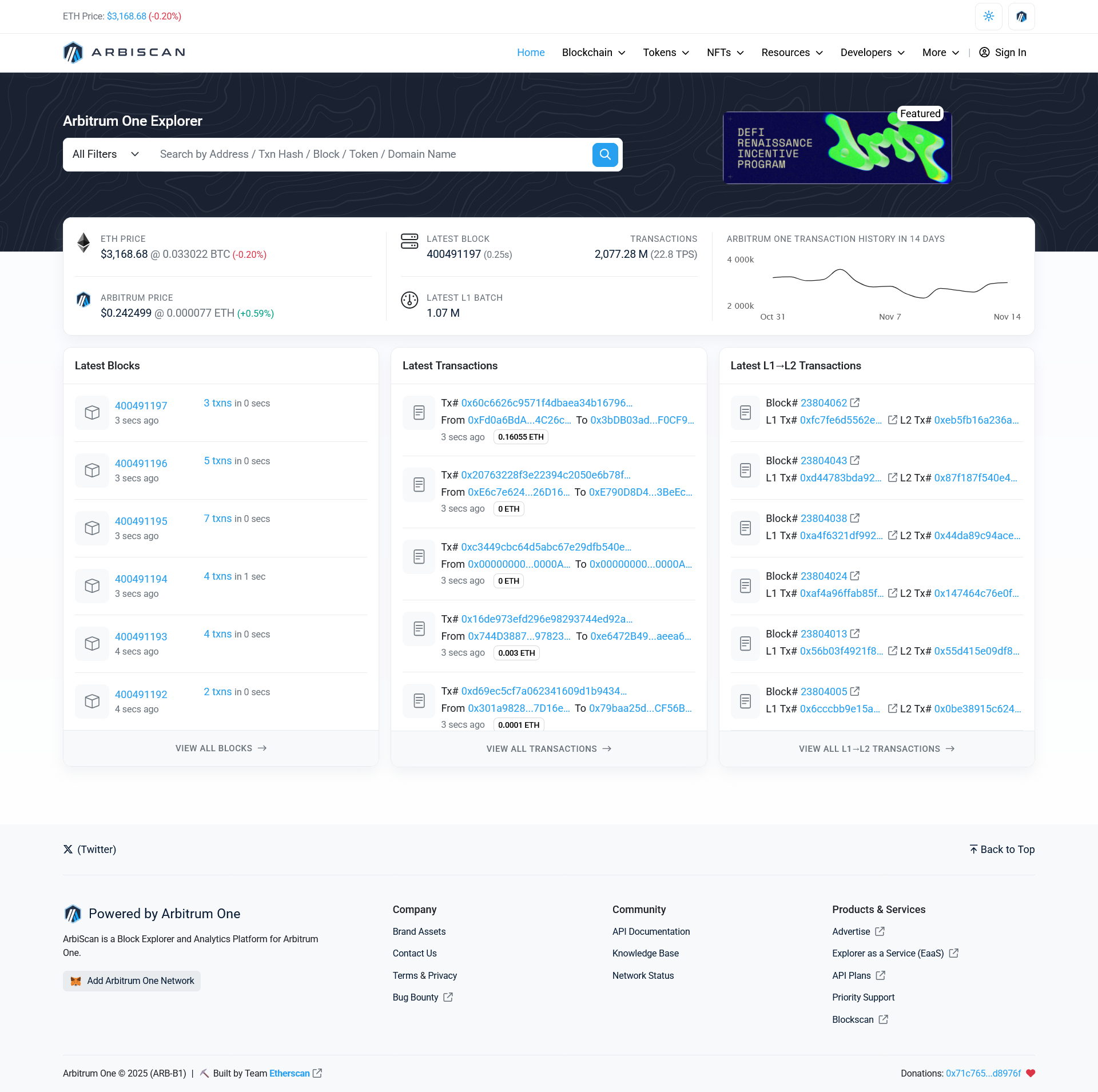
Arbiscan: Exploring the Arbitrum Blockchain with Transparency and Precision :-
As Ethereum continues to scale through Layer 2 solutions, Arbitrum has emerged as one of the most widely adopted networks for faster and cheaper transactions. Powering transparency and accessibility within this ecosystem is Arbiscan, the official block explorer for the Arbitrum network. Much like Etherscan for Ethereum, Arbiscan enables users to explore, verify, and analyze on-chain activity in real time.
What Is Arbiscan ?
Arbiscan is a blockchain explorer designed specifically for the Arbitrum network. It allows users to view transactions, blocks, wallet addresses, smart contracts, token transfers, and other on-chain data. Developed by the same team behind Etherscan, Arbiscan offers a familiar interface and robust tooling that both developers and everyday users can rely on.
Arbiscan supports multiple Arbitrum networks, including Arbitrum One and Arbitrum Nova, making it a central hub for activity across the Arbitrum ecosystem.
Why Arbiscan Matters ;
Block explorers are a foundational part of blockchain infrastructure. Arbiscan plays a critical role in ensuring:
. Transparency – Every transaction on Arbitrum can be publicly verified.
. Security – Users can confirm contract authenticity and monitor suspicious activity.
. Usability – Developers and users gain insights into network usage and performance.
Arbiscan, interacting with decentralized applications (dApps) would be far less intuitive and significantly riskier.
Key Features of Arbiscan ;
1. Transaction Tracking :-
Users can search transaction hashes (TXIDs) to view detailed information, including:
. Sender and receiver addresses
. Gas fees paid
. Block confirmations
. Transaction status (success or failure)
This is especially useful for troubleshooting delayed or failed transactions.
2. Address and Wallet Insights :-
By entering a wallet address, users can see:
. ETH and token balances
. Transaction history
. Token transfers and NFT activity
This helps users monitor their own wallets or analyze on-chain behavior of other addresses.
3. Smart Contract Verification :-
Arbiscan allows developers to:
. Verify and publish smart contract source code
. Read and interact with deployed contracts
. Audit contract behavior directly on-chain
Verified contracts increase trust and are often a prerequisite for serious DeFi projects.
4. Token and NFT Explorer :-
Arbiscan provides detailed pages for:
. ERC-20 tokens (supply, holders, transfers)
. ERC-721 and ERC-1155 NFTs
This makes it easier to research new tokens, track whale movements, or explore NFT collections.
5. Developer Tools and APIs :-
For developers, Arbiscan offers APIs that enable:
. Programmatic access to blockchain data
. Integration with analytics dashboards
. Monitoring of transactions and contracts
These tools are essential for building dApps, wallets, and analytics platforms on Arbitrum.
Who Uses Arbiscan ?
Arbiscan serves a wide range of users, including:
. DeFi traders tracking swaps and liquidity movements
. NFT collectors verifying minting and transfers
. Developers debugging smart contracts
. Security researchers monitoring exploits and anomalies
. Everyday users checking transaction confirmations
Whether you’re sending ETH or deploying a complex DeFi protocol, Arbiscan is an essential companion.
The Role of Arbiscan in the Arbitrum Ecosystem :-
As Arbitrum adoption grows, Arbiscan helps maintain trust in the network by making all activity visible and verifiable. It also supports ecosystem growth by lowering the barrier for developers and providing users with confidence when interacting with new applications.
In a decentralized world where “don’t trust, verify” is a core principle, Arbiscan embodies that ethos.
Conclusion :-
Arbiscan is more than just a block explorer—it’s a transparency engine for the Arbitrum network. By offering powerful analytics, developer tools, and user-friendly interfaces, Arbiscan plays a vital role in the scalability and trustworthiness of Ethereum’s Layer 2 future.
For anyone participating in the Arbitrum ecosystem, Arbiscan isn’t optional—it’s essential.